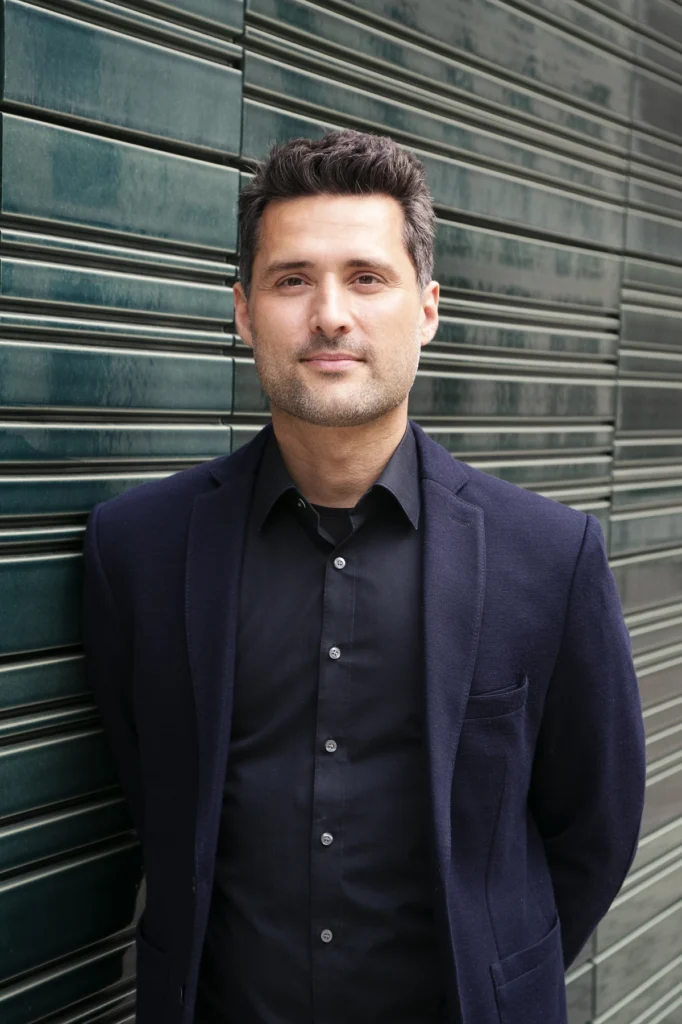
Dennis Krämer is a German sociologist at the University of Münster.
My research examines the history, governance, and lived experiences of gender-diverse people, as well as the ambivalent role of technologies in times of crisis.
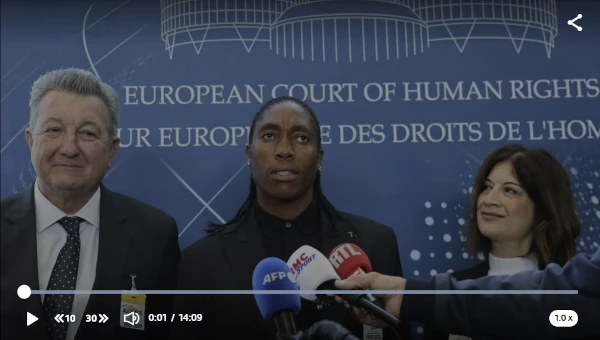
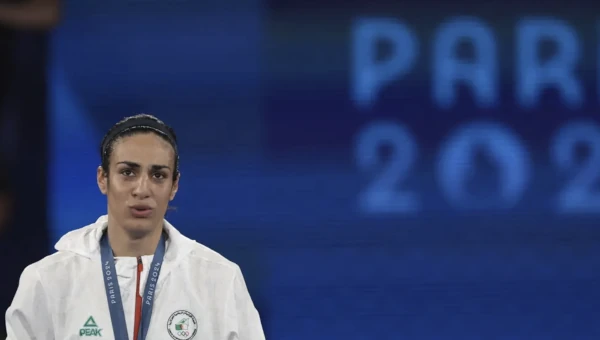
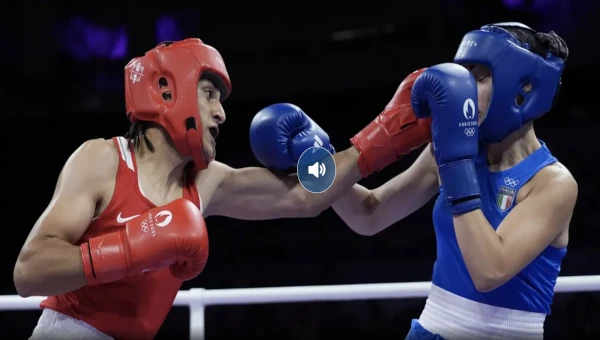
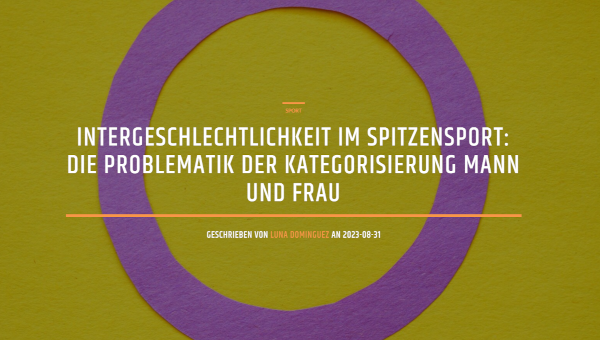
I analyze how the participation of gender-diverse people in sports and the eligibility regulations of international sports federations have evolved over recent decades, and how processes of inclusion and exclusion are tied to prevailing notions of fair competition and to the socio-political climates of specific periods. In this context, I wrote the book Intersex in Sport, which explores shifts in biomedical conceptions of sex and gender, media coverage, geopolitical contexts, and the role of biomedical procedures such as sex-verification methods (e.g., chromosome and SRY gene testing) through discourse analyses.
I also study how technologies can trigger and intensify crises, as well as strengthen resilience, and how conditions of trust, informed consent, and data governance shape their development and deployment. One strand of my work focuses on the potential and limits of health technologies in public-health emergencies. In this context, I founded the international network Resilient Healthcare in Times of Multiple Crises (RE-CARE), which connects researchers from Germany and Japan across disciplines.
Publications
Dennis Krämer (2020) Intersexualität im Sport. Mediale und medizinische Körperpolitiken
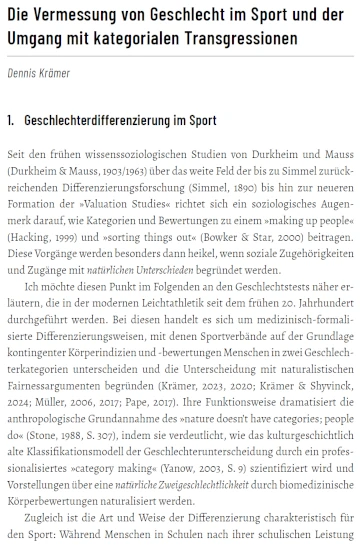
Dennis Krämer (2024) Die Vermessung von Geschlecht im Sport und der Umgang mit kategorialen Transgressionen
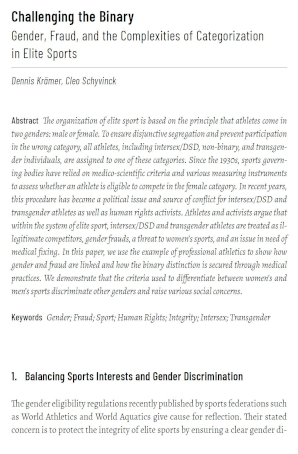
Dennis Krämer, Cleo Schyvinck (2024) Challenging the Binary: Gender, Fraud, and the Complexities of Categorization in Elite Sports
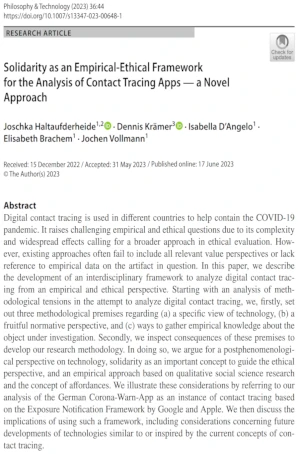
Joschka Haltaufderheide, Dennis Krämer, Isabella D’Angelo, Elisabeth Brachem, Jochen Vollmann (2023) Solidarity as an Empirial-Ethical Framework for the Analysis of Contact Tracing Apps – A Novell Approach
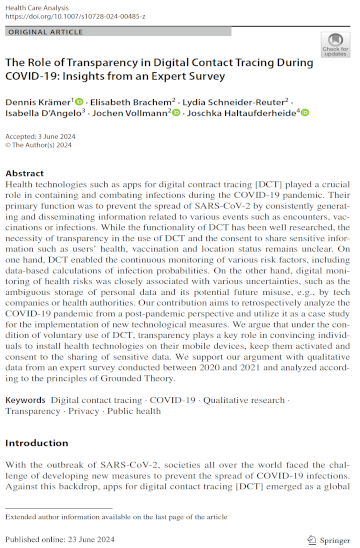
Dennis Krämer, Elisabeth Brachem, Lydia Schneider-Reuter, Isabella D’Angelo, Jochen Vollmann, Joschka Haltaufderheide (2024) The Role of Transparency in Digital Contact Tracing During COVID‑19: Insights from an Expert Survey